Italian Brainrot: Why It Goes Viral
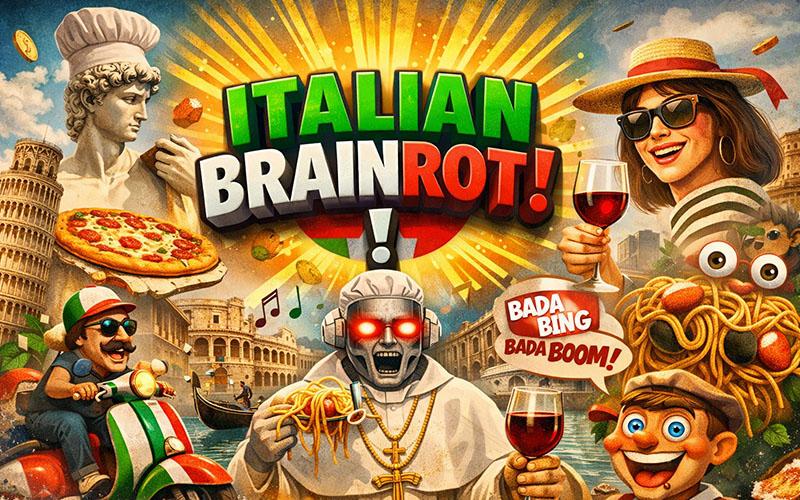
If you’ve spent even a few minutes on TikTok, Instagram Reels, or X lately, chances are you’ve encountered something called Italian Brainrot. Chaotic visuals, exaggerated Italian-sounding phrases, surreal AI-generated characters, and a sense of playful absurdity—this trend has spread globally at an astonishing speed.
But Italian Brainrot is more than just a meme. From a psychological perspective, it reveals something important about attention, humor, cognitive overload, and how our brains respond to modern digital culture.
In this article, we explore what Italian Brainrot really is, why it became so popular, and what psychology can tell us about its appeal.
What Is Italian Brainrot?
Italian Brainrot refers to a wave of intentionally nonsensical, overstimulating meme content, often generated or enhanced by AI. These videos and images usually include:
- Absurd or distorted Italian stereotypes
- Repetitive, catchy, and meaningless phrases
- AI-generated voices or characters
- Rapid visual changes and exaggerated expressions
The key feature is deliberate mental overload. The content is not meant to be logical, informative, or even coherent. Its goal is simple: overwhelm the viewer just enough to be entertaining.
Why Did Italian Brainrot Go Viral?
1. Cognitive Overload as Entertainment
From a psychological standpoint, Italian Brainrot exploits a paradox of modern attention. We are exhausted by information—but also addicted to stimulation.
Highly chaotic content:
- Requires minimal deep thinking
- Provides instant novelty
- Keeps attention through unpredictability
Our brains respond to this with short bursts of dopamine, similar to what happens with fast-paced games or rapid scrolling.
2. The Appeal of “Meaninglessness”
In a world saturated with serious news, productivity pressure, and self-optimization content, Italian Brainrot offers permission to disengage.
Psychologically, this aligns with:
- Cognitive relief
- Temporary suspension of meaning-making
- Humor as a coping mechanism
Laughing at something that makes no sense can actually reduce mental fatigue.
3. AI and the Uncanny Humor Effect
Many Italian Brainrot memes rely on AI-generated voices or visuals that feel almost human—but not quite. This taps into the uncanny valley, producing a mix of discomfort and amusement.
This discomfort:
- Heightens emotional response
- Makes content more memorable
- Encourages sharing as a social reaction (“You have to see this”)
Italian Brainrot and Attention Span
One reason this trend matters is what it reveals about attention patterns in the digital age.
Research in cognitive psychology shows that frequent exposure to:
- Rapid visual switching
- Fragmented audio
- Nonlinear narratives
can train the brain to prefer high-intensity, low-coherence content. Italian Brainrot fits perfectly into this environment.
This doesn’t mean the trend is harmful by default—but it does raise questions about:
- Attention regulation
- Digital fatigue
- Emotional self-awareness while consuming content
Why People Share Italian Brainrot
Sharing these memes isn’t random. Social psychology suggests three main motives:
- Social bonding – Sharing absurd content creates a sense of “we get it” humor
- Identity signaling – It shows awareness of internet culture
- Emotional regulation – Humor helps release stress
In this sense, Italian Brainrot functions as a collective inside joke on a global scale.
What Italian Brainrot Says About Us
Rather than dismissing it as “brain-rotting content,” it’s more accurate to see Italian Brainrot as a symptom of digital overload culture.
It reflects:
- Shortened attention cycles
- The normalization of AI-generated culture
- A collective need for low-stakes, low-meaning entertainment
Understanding why we enjoy such content can increase self-awareness about our media habits.
A Psychological Takeaway
Not all viral trends are shallow. Some act like mirrors.
Italian Brainrot shows how modern minds cope with:
- Constant stimulation
- Information anxiety
- Cognitive exhaustion
By recognizing these patterns, we can make more conscious choices about how we consume content—and how it affects our mood, focus, and mental energy.
FAQ
Is Italian Brainrot harmful to mental health?
Not inherently. Occasional exposure is harmless, but excessive consumption of overstimulating content may contribute to attention fatigue.
Why does meaningless content feel relaxing?
Because it reduces cognitive effort and temporarily frees the brain from goal-oriented thinking.
Is this trend related to AI culture?
Yes. AI tools make it easier to produce surreal, uncanny content at scale, accelerating such trends.
Want to Understand Your Digital Personality?
Why do some people love chaotic memes while others find them irritating? Personality traits, attention styles, and emotional regulation all play a role.
At Testsgate, you can explore scientifically grounded psychological tests that help you better understand:
- Your attention patterns
- Your cognitive style
- How you emotionally respond to digital content
👉 Take a test on Testsgate and discover what your online behavior says about you.