The Psychology of Boxing Hype
Jake Paul, Anthony Joshua, and the Psychology of Modern Boxing Hype
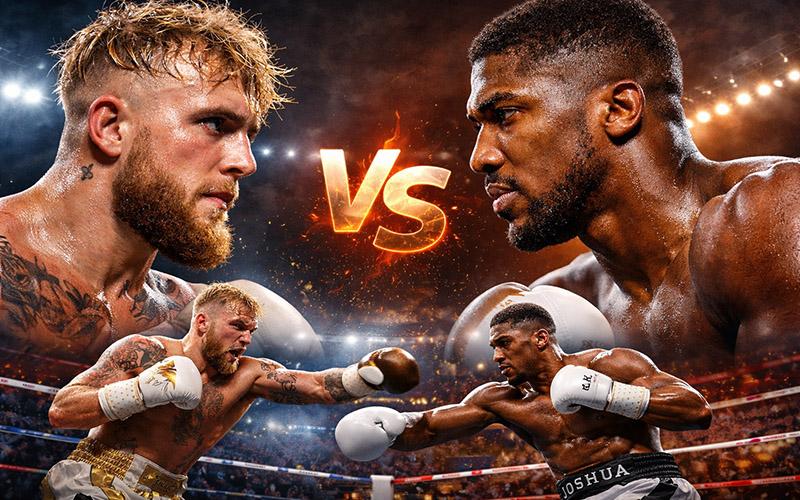
In recent years, boxing has entered a new phase—one where athletic competition, celebrity culture, and media storytelling are deeply intertwined. Few figures illustrate this shift better than Jake Paul, a social media star turned professional boxer, and Anthony Joshua, a former unified heavyweight champion and symbol of elite, traditional boxing.
Although these two fighters represent very different paths, discussions around a potential matchup between them reveal something more important than a single fight: how modern audiences experience boxing today.
Two Fighters, Two Worlds
Anthony Joshua’s career follows a familiar narrative in boxing history. Olympic gold, world titles, high-profile defeats, and carefully planned comebacks have shaped his public image. His identity is rooted in discipline, legacy, and long-term credibility within the sport.
Jake Paul, by contrast, emerged from outside boxing’s traditional ecosystem. His rise has been built on spectacle, promotion, and an acute understanding of media attention. While his professional record is real, his success depends as much on storytelling and audience engagement as on technical skill.
When these two names are mentioned together, the contrast is striking—and psychologically compelling.
Why the Idea of This Fight Feels So Powerful
From a psychological perspective, the fascination with a possible Paul–Joshua fight is not about predicting a winner. It is about narrative conflict.
Humans are naturally drawn to stories with clear oppositions:
- tradition vs disruption
- expertise vs audacity
- legacy vs novelty
Boxing has always relied on these themes, but today they are amplified by digital platforms and 24/7 media cycles. Even without a confirmed bout, the mere possibility creates emotional engagement, debate, and anticipation.
This is a classic example of how expectation can become more influential than reality.
The Role of Media in Shaping Boxing Perception
Modern boxing no longer lives only in the ring. Interviews, promotional clips, streaming platforms, and influencer commentary shape how fans perceive fighters long before a bell rings.
This environment encourages:
- Premature conclusions (“Who would win?” becomes “Who won?”)
- Emotional investment without closure
- Overconfidence in incomplete information
From a behavioral psychology standpoint, this reflects our discomfort with uncertainty. The brain prefers a coherent story—even an unfinished one—over ambiguity.
Boxing, Identity, and Fan Psychology
Supporters often align themselves with fighters not just because of skill, but because of identity resonance.
Some admire Joshua’s professionalism and resilience. Others are drawn to Paul’s confidence, defiance of norms, and outsider status.
These preferences say less about boxing knowledge and more about:
- attitudes toward authority
- risk tolerance
- attraction to status or rebellion
Understanding these tendencies is part of understanding how we make judgments under pressure and hype.
When Entertainment and Sport Overlap
The growing involvement of large streaming platforms and entertainment-driven promotions has blurred the line between sport and spectacle. This does not diminish boxing—but it changes how audiences consume it.
Fights are now experienced as:
- global media events
- personality-driven narratives
- moments of shared attention rather than purely athletic contests
For viewers, this can heighten excitement, but it can also distort perception—making rumors feel definitive and possibilities feel inevitable.
A Psychological Takeaway for Fans
The ongoing conversation around fighters like Jake Paul and Anthony Joshua highlights an important point:
our reactions to sports often mirror how we handle uncertainty, competition, and social influence in everyday life.
Do we wait for evidence, or do we decide early?
Do we value credentials, or confidence?
Do we enjoy the tension of “what if,” or do we rush toward conclusions?
These are not boxing questions—they are cognitive ones.
If you are interested in understanding how you personally respond to hype, rivalry, and high-stakes narratives, psychological self-assessment tools—such as those available on Testsgate—can offer structured insights into decision-making styles and cognitive biases.
Frequently Asked Questions (FAQ)
Is a Jake Paul vs Anthony Joshua fight confirmed?
No official bout has been announced or finalized.
Why does this matchup attract so much attention?
Because it represents a symbolic clash between traditional boxing and media-driven boxing culture.
Does media hype influence how fans judge fighters?
Yes. Repetition, storytelling, and uncertainty significantly shape perception and expectations.
Final Thoughts
Boxing has always been about more than punches. Today, it is also about attention, identity, and psychology. Whether or not Jake Paul and Anthony Joshua ever share a ring, the discussion surrounding them reveals how modern audiences think, feel, and decide.
And in that sense, the real contest may already be taking place—not in the ring, but in the mind of the viewer.